Victoria Shoppesville
Project Details
Location : Upper Mabini Street, Baguio City, Philippines
Owner : The Heirs of Ang Beng
Enclosed Floor Area : 4,580 square meters
Completed in: 1983
Project Description
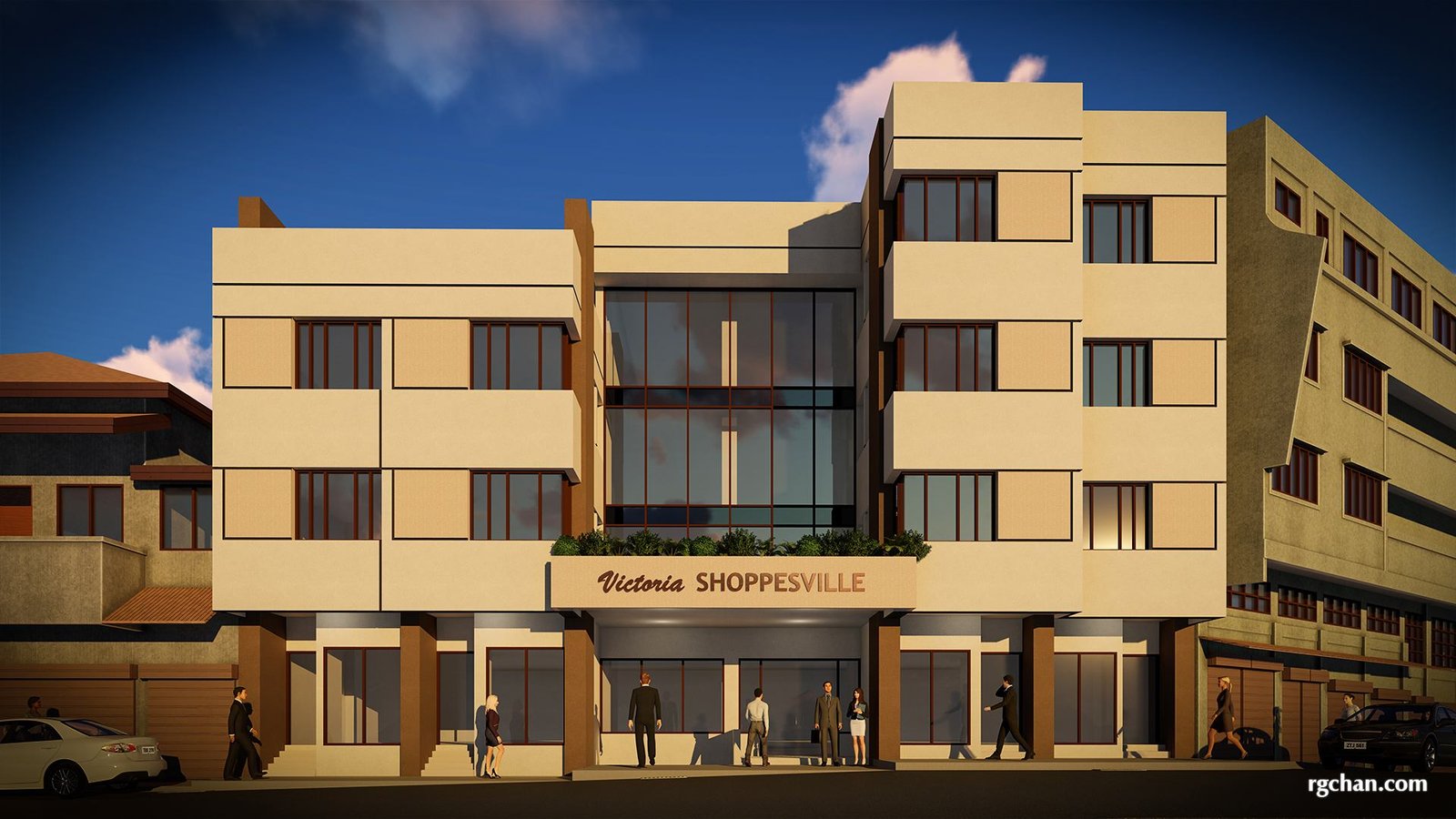
Completed in 1983, Victoria Shoppesville stands as one of the enduring commercial landmarks of Baguio City's Central Business District. Developed for the Heirs of Ang Beng, the project was conceived during a period of rapid urban growth when the demand for strategically located commercial space was transforming the city's economic landscape. More than four decades later, the building continues to serve its intended purpose, demonstrating the lasting value of thoughtful planning, sound engineering, and practical architectural design.
Occupying a unique sloping site between Mabini Street and Jacinto Street, the development takes full advantage of Baguio City's topography through an innovative split-level configuration. What appears as a four-story commercial building from Mabini Street reveals three additional levels toward Jacinto Street, creating a seven-level structure that maximizes the site's development potential while maintaining efficient access from both streets. This dual-frontage arrangement significantly enhances circulation, tenant accessibility, service operations, and overall commercial flexibility.
The project was designed around the principles of adaptability and long-term functionality. Flexible floor plates accommodate a wide range of retail, office, and commercial uses, allowing the building to evolve alongside changing market demands over the decades. Strategic vertical circulation systems and multiple access points ensure efficient movement of customers, tenants, and service personnel throughout the development, contributing to its continued commercial success.
Architecturally, Victoria Shoppesville reflects a restrained and pragmatic design approach. Rather than relying on stylistic trends, the building emphasizes clarity of form, efficient space planning, and a strong urban presence. Its straightforward architectural language has enabled it to age gracefully, maintaining its relevance within an ever-changing cityscape while continuing to serve as an important component of the downtown commercial fabric.
Perhaps the project's most compelling testament to quality lies in its proven structural performance. During the devastating 1990 Luzon Earthquake that caused widespread destruction throughout Baguio City, Victoria Shoppesville emerged without significant structural damage. This real-world test validated the integrity of its engineering and construction, reinforcing confidence in the building's durability and long-term resilience. For owners, tenants, and occupants alike, this performance remains one of the project's most significant achievements.
Beyond its physical attributes, Victoria Shoppesville represents a philosophy of development rooted in practicality, longevity, and responsible investment. Its continued occupancy and commercial vitality demonstrate how carefully considered design decisions can create lasting value that extends far beyond the initial construction period.
Today, Victoria Shoppesville remains an active and recognizable destination within Baguio City's commercial core. More than forty years after its completion, it continues to exemplify the principles of sound urban development—efficiently planned, structurally resilient, commercially viable, and architecturally enduring. Its longevity stands as a testament to the belief that the most successful buildings are not merely designed for the present, but are built to serve generations to come.