Hotel Elizabeth
Project Details
Location : Gibraltar corner Felipe Street, Baguio City, Philippines
Owner : Adolfo Realty Corporation
Enclosed Floor Area : 4,438 square meters
Completed in: 2004
Project Description
Few hospitality projects are won on reputation alone. Hotel Elizabeth was awarded to RG Chan & Associates after a competitive design selection in which five architectural firms were invited to develop concept proposals for the project. Our submission distinguished itself by presenting a solution that not only fulfilled the owner's vision, but also responded more intelligently to the site's natural setting, operational requirements, and long-term commercial objectives.
The owner's consultant had initially envisioned a design influenced by the architectural philosophy of Frank Lloyd Wright. While respecting that direction, we developed a proposal that interpreted those principles in a manner better suited to Baguio's mountain environment and the client's hospitality program. It was this balance of architectural character, functionality, and sensitivity to the site that ultimately secured the commission.
One design decision proved especially significant. Our concept required the removal of only a single mature tree, while the competing proposals called for the removal of three or more. Rather than forcing the land to accommodate the building, we designed the building to follow the natural contours of the site, preserving as much of the existing landscape as possible. This philosophy of working with the environment instead of against it became one of the defining principles of the project.
Hotel Elizabeth has since become one of Baguio City's most recognizable hospitality landmarks, embodying a design philosophy that combines timeless elegance, operational efficiency, and a deep respect for its mountain setting.
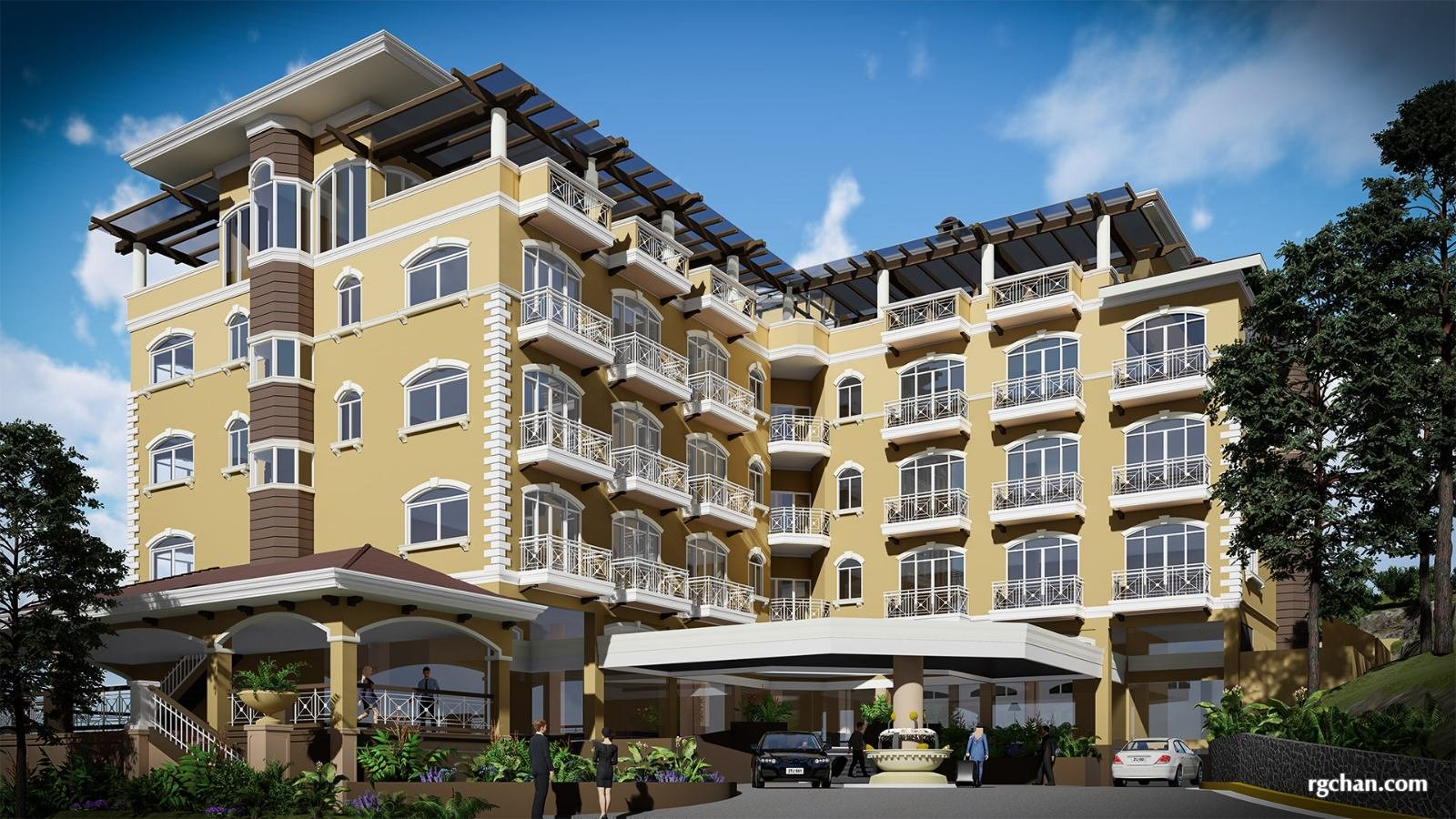
The architectural language draws inspiration from the charm and warmth of classic European mountain resorts, interpreted through a contemporary lens. Elegant balconies, richly articulated façades, carefully proportioned roof forms, and inviting outdoor spaces create a welcoming atmosphere that appeals to both leisure and business travelers. The resulting composition achieves a rare balance between sophistication and familiarity, giving the hotel a character that is both refined and approachable.
At the heart of the guest experience is a spacious arrival sequence anchored by a grand lobby that serves as the social centerpiece of the development. Complementing this are thoughtfully planned hospitality amenities, including a restaurant, coffee shop, function spaces, and landscaped gathering areas that encourage relaxation and social interaction. These facilities were carefully integrated into the overall design to create a seamless and memorable experience for guests from arrival through departure.
Guest accommodations were designed to maximize comfort, natural light, and views of the surrounding mountain landscape. Private balconies extend the living space outward, allowing visitors to enjoy Baguio's cool climate and scenic environment. Efficient room planning, intuitive circulation, and discreet back-of-house operations ensure that the hotel functions smoothly while maintaining the high standards expected of an upscale hospitality destination.
A unique feature of the development is the private penthouse residence located on the uppermost level. Conceived as an exclusive family retreat for the owner, the penthouse is seamlessly integrated into the overall design, allowing private residential living to coexist harmoniously with hotel operations. This dual-purpose arrangement demonstrates the flexibility and sophistication of the project's planning approach.
Beyond its physical amenities, Hotel Elizabeth was envisioned as a destination that captures the spirit of Baguio itself—warm, welcoming, and memorable. The building's enduring popularity can be attributed not only to its architectural character but also to the quality of the experiences it creates for its guests. Every aspect of the design was guided by the belief that successful hospitality architecture should evoke a sense of place while delivering comfort, convenience, and lasting appeal.
Today, Hotel Elizabeth remains one of the most admired hotels in the City of Pines, recognized for its distinctive architecture, gracious atmosphere, and enduring relevance. Its continued success stands as a testament to the power of thoughtful planning, contextual design, and an unwavering commitment to hospitality excellence.
RELATED INSIGHT
The Hotel Elizabeth project illustrates the importance of continuous learning and technological adaptation. As one of our earliest BIM-based projects using Revit in 2003, it demonstrated how innovation can improve coordination, documentation, and project delivery.
Lessons Learned from Four Decades of Building Projects