New Media Services Building
Project Details
Location : Baguio Export Processing Zone (PEZA), Baguio City, Philippines
Owner : New Media Services Inc.
Enclosed Floor Area : 1,865 square meters
Completed in: 2016
Project Description
Conceived as a showcase of innovation, sustainability, and workplace excellence, the New Media Services Building was envisioned as a next-generation corporate headquarters within the Baguio Export Processing Zone. Designed during a period when energy-efficient architecture and smart-building technologies were only beginning to gain wider acceptance, the project represented a forward-looking commitment to environmental stewardship, technological integration, and employee well-being.
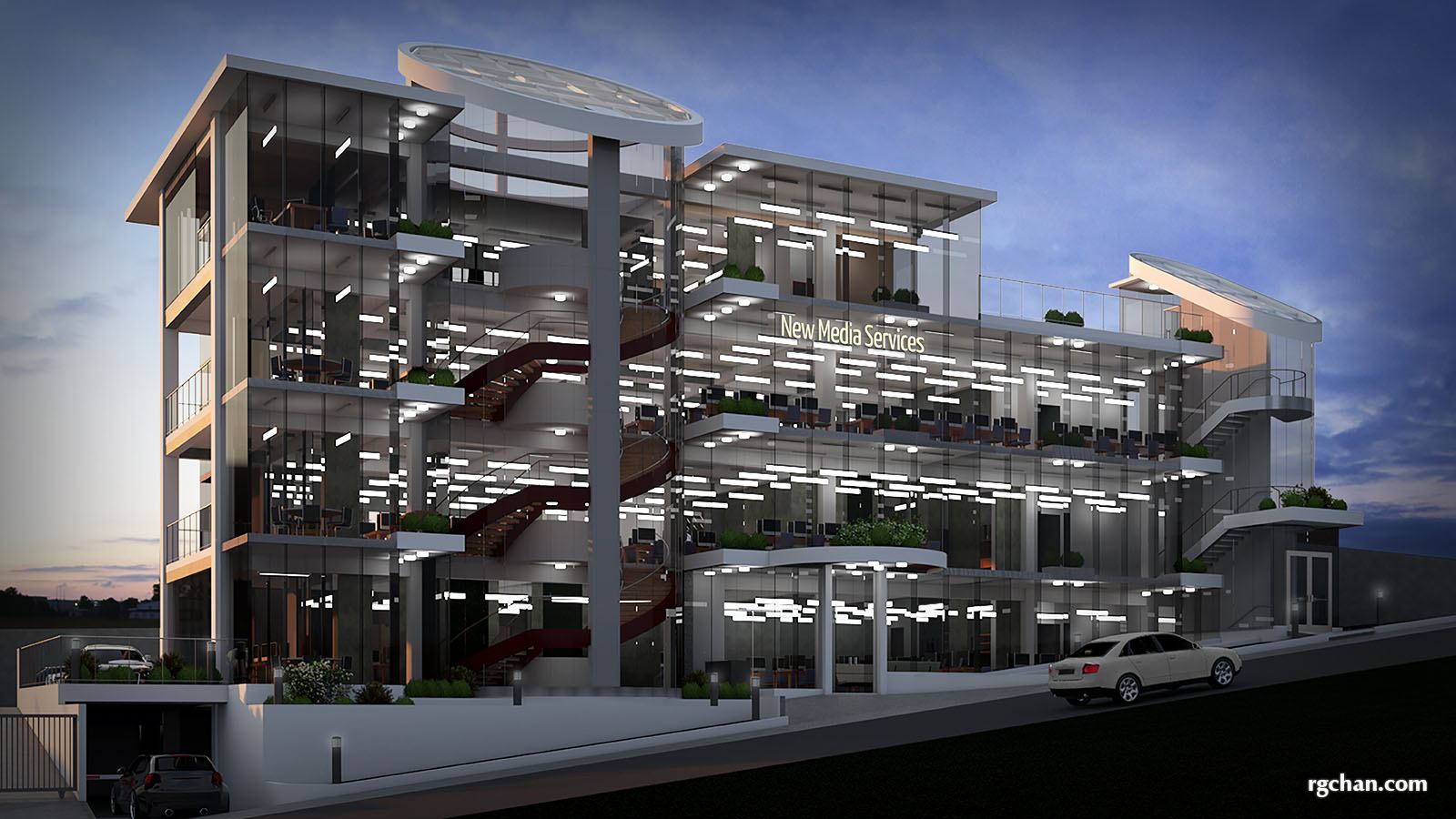
The five-story office building is organized around an open and highly collaborative workplace environment that encourages communication, flexibility, and operational efficiency. Expansive floor plates provide adaptable office spaces capable of accommodating evolving organizational needs, while carefully planned circulation systems promote interaction and connectivity across departments. At the heart of the composition is a dramatic helicoidal staircase, conceived as both a sculptural centerpiece and a functional element that visually and physically links the building's various levels.
Architecturally, the project embraces transparency and openness through the extensive use of curtain glass façades, maximizing natural daylight and creating a strong visual connection between the workplace and the surrounding mountain landscape. The design takes full advantage of Baguio's temperate climate, incorporating passive environmental strategies to enhance occupant comfort while reducing energy consumption. Protective membrane shutters and carefully considered façade treatments mitigate solar heat gain, balancing transparency with environmental performance.
Sustainability was a fundamental design driver throughout the project. Photovoltaic solar panels were integrated into the building's energy strategy to supplement electrical requirements and reduce dependence on conventional power sources. This commitment to renewable energy was complemented by energy-conscious building systems and efficient lighting solutions, reinforcing the project's aspiration to achieve a high level of environmental responsibility while maintaining operational effectiveness.
The building also explored emerging smart-building concepts through the incorporation of advanced lighting controls and automated building management features. Occupants were envisioned to have the ability to customize lighting conditions through mobile-device interfaces, while integrated switching systems seamlessly coordinated automated and manual controls. These innovations reflected the client's technology-oriented culture and demonstrated how intelligent systems could enhance both workplace productivity and user experience.
Beyond its technical achievements, the New Media Services Building was designed as a statement of corporate identity. Its contemporary architectural language, expressed through clean structural lines, transparent façades, and refined material selections, conveys a sense of innovation, confidence, and progress. The building's distinctive profile establishes a strong visual presence within the economic zone while maintaining sensitivity to its natural highland setting.
The project stands as an example of RGC&A's commitment to integrating architecture, technology, and sustainability into a cohesive design solution. By combining renewable energy systems, smart-building technologies, environmentally responsive design strategies, and contemporary workplace planning, the New Media Services Building demonstrates how architecture can support both business performance and environmental responsibility. The result is a visionary corporate environment that anticipates the evolving needs of modern organizations while setting a benchmark for progressive office development in Baguio City.
Project Walkthrough Video
Explore the New Media Services Building through this project presentation and discover how architecture, technology, sustainability and workplace innovation were brought together into a single design vision.