Lingsat Meetinghouse
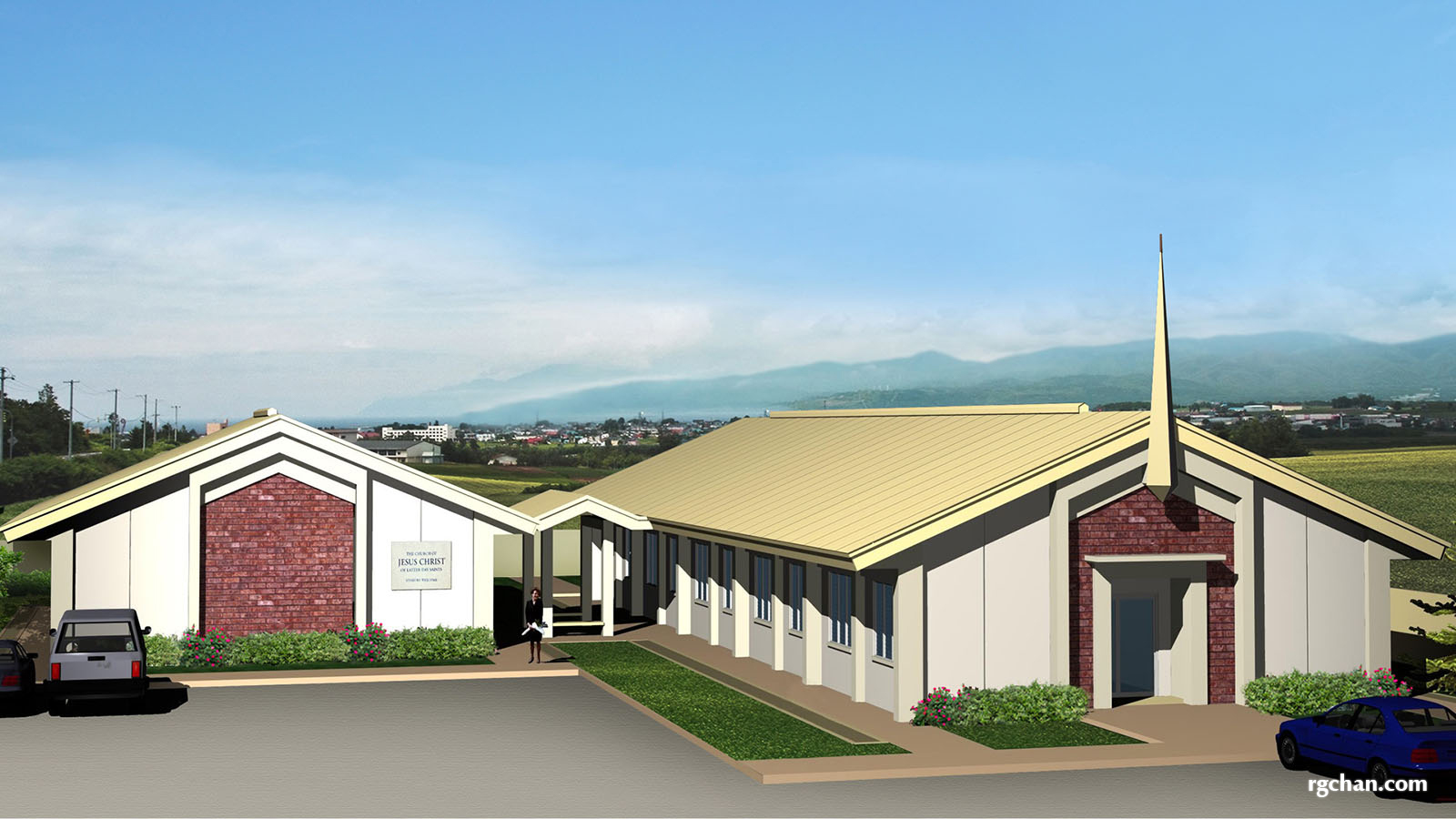
Project Details
Location : Lingsat, San Fernando City, La Union, Philippines
Owner : The Church of Jesus Christ of Latter-Day Saints (Mormons)
Enclosed Floor Area : 600 square meters
Completed in: 2002
Project Description
Situated on a prominent site within the City of San Fernando, La Union, the Lingsat Meetinghouse was conceived as a dignified and enduring center for worship, religious education, and community fellowship. Developed for The Church of Jesus Christ of Latter-day Saints, the project reflects the Church’s longstanding commitment to creating functional, welcoming, and spiritually uplifting environments that serve both present needs and future growth. Its strategic location, combined with a naturally elevated terrain, allowed the facility to establish a strong visual presence while minimizing extensive earthworks and site modification.
The project forms part of the Church’s comprehensive building program throughout the Philippines, a program distinguished by rigorous standards in planning, budgeting, quality control, and project management. Through participation in developments such as the Lingsat Meetinghouse, R.G. Chan & Associates gained valuable experience working within one of the most disciplined institutional project delivery systems in the world—an experience that would significantly influence the firm’s own methodologies for professional practice and project execution.
The facility follows the Church’s established S-170-13 meetinghouse prototype, designed to accommodate approximately 170 worshippers together with thirteen dedicated instructional spaces. While based on a standardized program, the design was carefully adapted to the site’s unique conditions and operational requirements. The resulting facility achieves an effective balance between efficiency, functionality, and architectural character, creating an environment that supports worship, learning, and community interaction.
Architecturally, the development is organized around clearly defined chapel and classroom wings, allowing worship and educational activities to operate harmoniously within a unified architectural framework. A welcoming entrance sequence leads members and visitors into a central foyer that serves as both an orientation space and gathering area, reinforcing the sense of community that lies at the heart of the Church’s mission. The clarity of circulation and spatial organization ensures efficient movement throughout the facility while preserving the reverent atmosphere appropriate to sacred functions.
Particular attention was given to site planning and security. The perimeter design employs a thoughtful combination of open grille fencing along highly visible boundaries and solid enclosure walls where privacy and protection are required. This balanced approach enhances both security and openness, creating a campus environment that is safe, inviting, and visually integrated with its surroundings. Vehicular and pedestrian access points are carefully positioned to facilitate orderly circulation while maintaining clear site organization.
A significant enhancement to the original program was the incorporation of a Church Educational System (CES) component, expanding the facility’s role beyond traditional worship functions. This addition enabled the meetinghouse to accommodate seminary and religious education activities, further strengthening its value as a center for spiritual development and lifelong learning within the community.
Durable materials, efficient planning, and straightforward maintenance considerations were integrated throughout the design, reflecting the Church’s philosophy of responsible stewardship and long-term value. Natural lighting, comfortable interior environments, and carefully proportioned spaces contribute to a facility that remains both practical and uplifting for its users.
More than a chapel building, the Lingsat Meetinghouse stands as a testament to thoughtful institutional architecture—combining spiritual purpose, educational opportunity, and community service within a cohesive and enduring design. Through its clarity of planning, adaptability, and architectural restraint, the project demonstrates how disciplined design can create places that remain meaningful and relevant for generations.