GSIS Offices-Parking Development
Project Details
Location : Session Road Extension, Baguio City, Philippines
Proponent : City of Baguio with the Government Service Insurance Corporation
Building Area: 38,183 square meters
Status: Unbuilt
Project Description
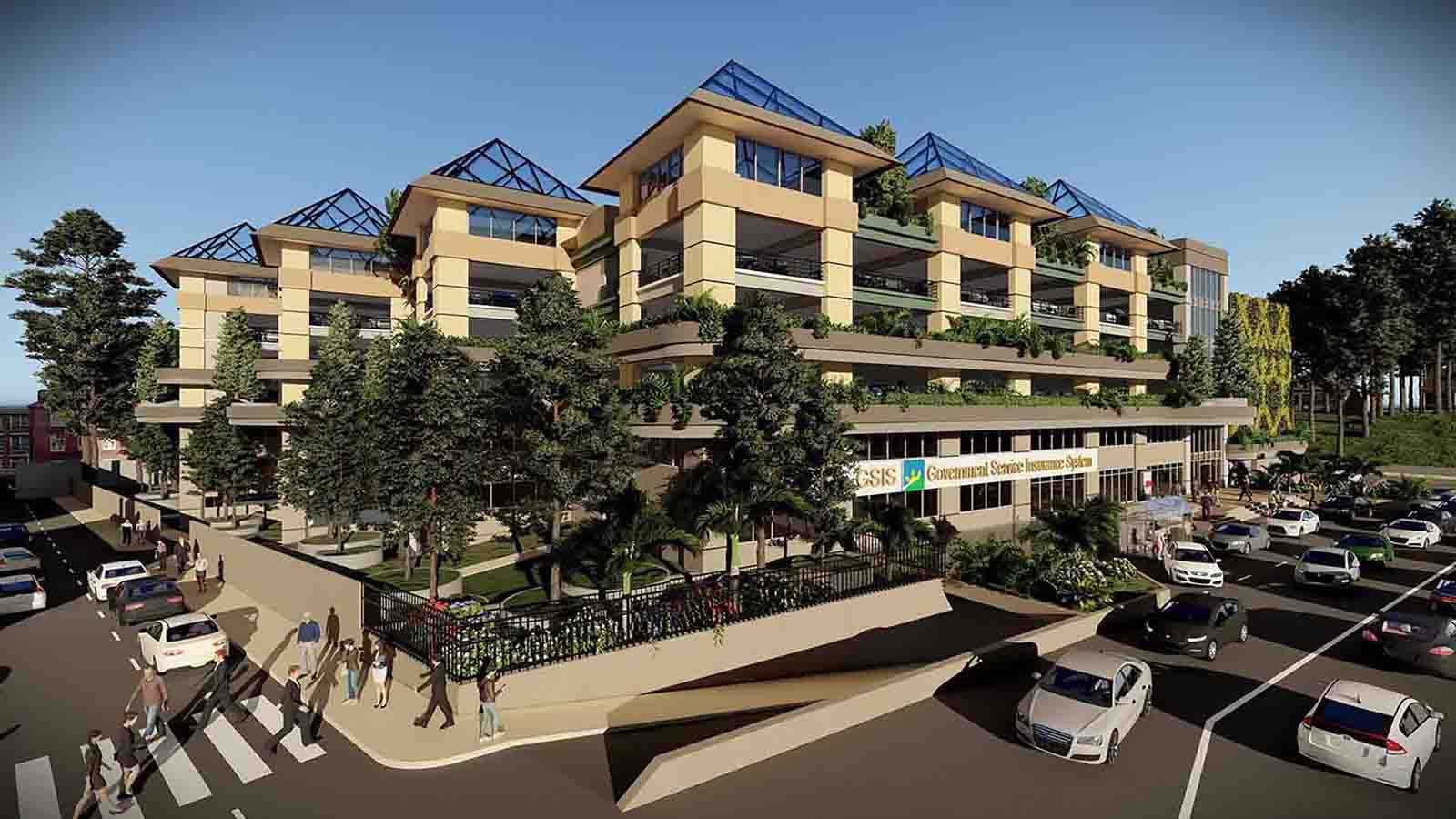
Conceived as a landmark civic development for Baguio City, this mixed-use government complex was envisioned to consolidate key public functions within a single sustainable and culturally responsive development. The project integrates administrative offices, public parking facilities, and a Public Utility Jeepney (PUJ) depot into a unified architectural solution designed to improve operational efficiency, enhance public service delivery, and contribute positively to the urban environment.
The architectural concept draws inspiration from the rich cultural heritage of the Cordilleras, particularly the indigenous architecture of the Ifugao people. Elements of the traditional hut, including its distinctive roof form, structural expression, and elevated character, were reinterpreted in a contemporary manner to create a building that is both modern and unmistakably rooted in place. The façade design further reflects native artistry through patterns inspired by traditional Cordilleran tattoos, expressed as vertical gardens that symbolize family harmony, unity, and community.
At the heart of the development is a commitment to sustainable design. The project was conceived as a Green Building that incorporates extensive landscaping, living walls, roof gardens, and naturally ventilated spaces to improve environmental performance and occupant well-being. Solar photovoltaic panels were integrated into the rooftop design to supplement the building's energy requirements, while abundant greenery contributes to oxygen production, heat reduction, and an enhanced urban microclimate. The result is a facility that balances functionality with environmental stewardship.
The office component was designed to provide modern, efficient, and comfortable workspaces organized around naturally lit and ventilated atrium spaces. These internal courts serve as visual and social focal points, bringing daylight deep into the building while fostering interaction among employees and visitors. Public-facing services are strategically located for accessibility, while administrative functions benefit from flexible and efficient floor layouts.
Complementing the office functions is a multi-level public parking facility designed to address the growing demand for organized parking within the city center. By consolidating parking requirements within a dedicated structure, the project helps reduce roadside congestion and improve overall traffic circulation. An integrated PUJ depot further supports the city's public transportation network by providing a secure and organized facility for jeepney operations without compromising the efficiency of the primary development.
Beyond its functional requirements, the project seeks to establish a model for future civic architecture in Baguio City—one that celebrates local identity, embraces sustainable development, and responds thoughtfully to the needs of a growing urban population. Through the integration of culture, ecology, mobility, and public service, the proposal demonstrates how government infrastructure can become both a practical asset and a meaningful expression of community values.
Although unbuilt, the project remains a compelling vision for a greener, more culturally grounded, and people-centered approach to civic development in the City of Pines.