Baguio Masonic Center
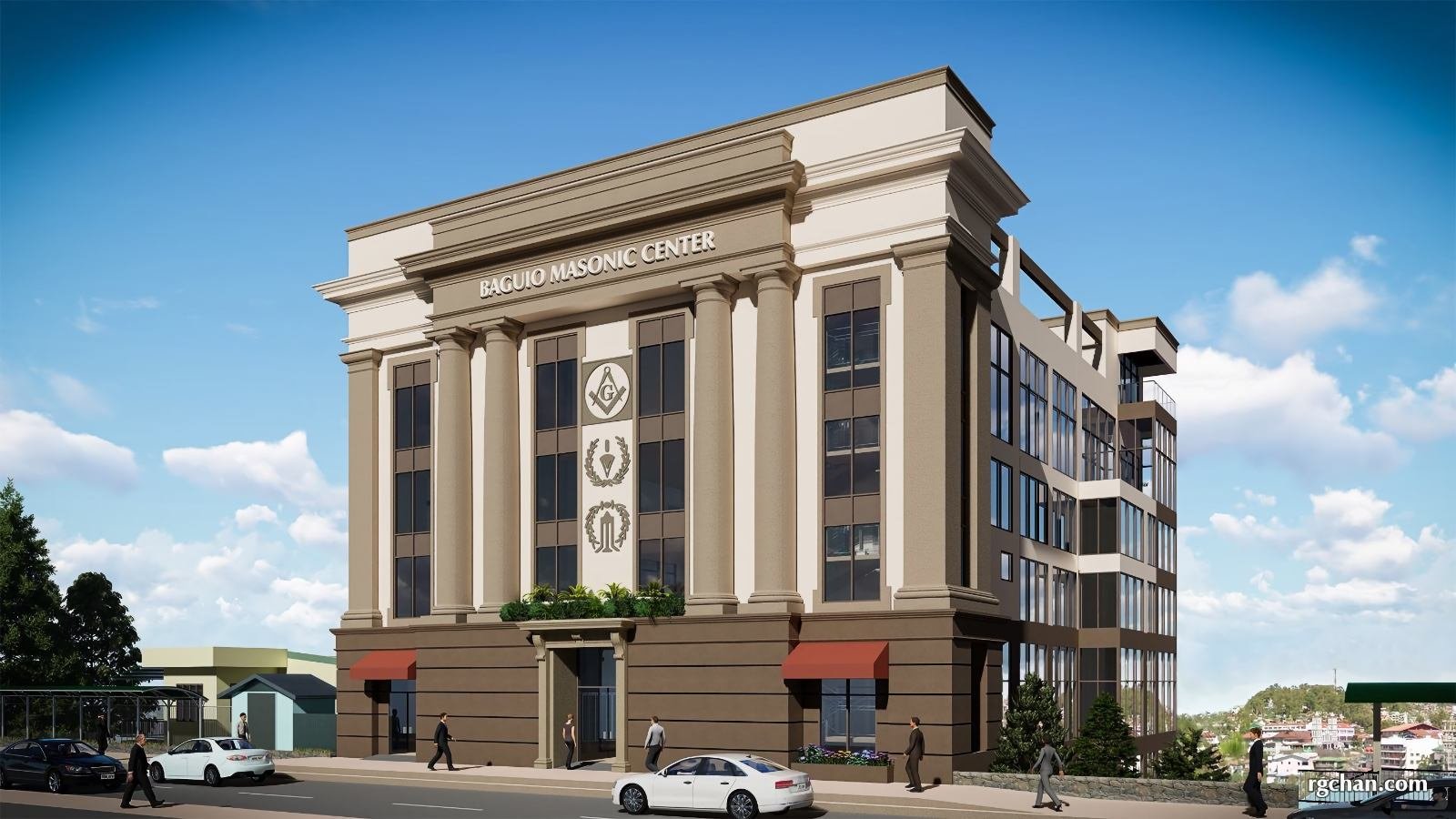
Project Details
Location : Yandoc Street, Baguio City, Philippines
Proponent : Baguio Masonic Fraternal Association, Inc.
Building Area: 6,086 square meters
Status: Unbuilt
Project Description
The Baguio Masonic Center was envisioned as a distinguished institutional and commercial development that would serve as the permanent home of the Baguio Masonic Fraternal Association while providing a sustainable source of revenue to support its long-term programs and operations. Strategically located along Yandoc Street in Baguio City, the project was conceived as a modern landmark that reflects the enduring values of Freemasonry—brotherhood, integrity, knowledge, and service to the community.
The architectural design draws inspiration from the timeless language of classical architecture, employing strong proportions, monumental columns, and a dignified façade to convey permanence, stability, and civic presence. The building's formal composition creates an image befitting one of the city's oldest and most respected fraternal organizations while establishing a recognizable identity within the urban fabric of Baguio.
Designed as a multi-purpose facility, the development combines institutional, assembly, office, and commercial functions within a single integrated structure. Dedicated spaces for Masonic activities, meetings, ceremonial functions, and fellowship areas were planned alongside income-generating office and commercial spaces, creating a balanced development that supports both organizational and financial objectives. This mixed-use approach ensures that the facility remains active and relevant throughout the day while providing long-term economic sustainability for the Association.
Given the challenges of a sloping urban site and the limited availability of parking within the city center, the project incorporates two basement levels dedicated primarily to parking and building support functions. By locating vehicle accommodation below grade, the design preserves the building's street presence while maximizing the use of the site for its primary institutional and commercial purposes. The parking levels were carefully planned to provide convenient access for members, tenants, and visitors while minimizing the impact of vehicles on the pedestrian environment.
The upper levels were designed to take advantage of the site's elevated position, offering generous natural lighting, expansive views, and flexible interior spaces capable of adapting to future requirements. Efficient circulation systems, modern building services, and a rational structural framework contribute to the building's long-term functionality and operational efficiency.
Beyond its physical form, the Baguio Masonic Center was envisioned as a symbol of continuity between tradition and progress. While rooted in the principles and heritage of Freemasonry, the project embraces contemporary construction methods and modern building standards to create a facility capable of serving future generations. Its architecture reflects the organization's commitment to personal growth, community engagement, and responsible stewardship.
Although the project remains unbuilt, the Baguio Masonic Center stands as a compelling vision for a modern fraternal headquarters—one that combines institutional dignity, economic sustainability, and thoughtful urban design into a landmark development worthy of its purpose and place within the City of Pines.