Baguio Justice Project
Government and institutional architecture project by R.G. Chan & Associates, a Baguio City-based architectural firm serving clients throughout the Philippines.
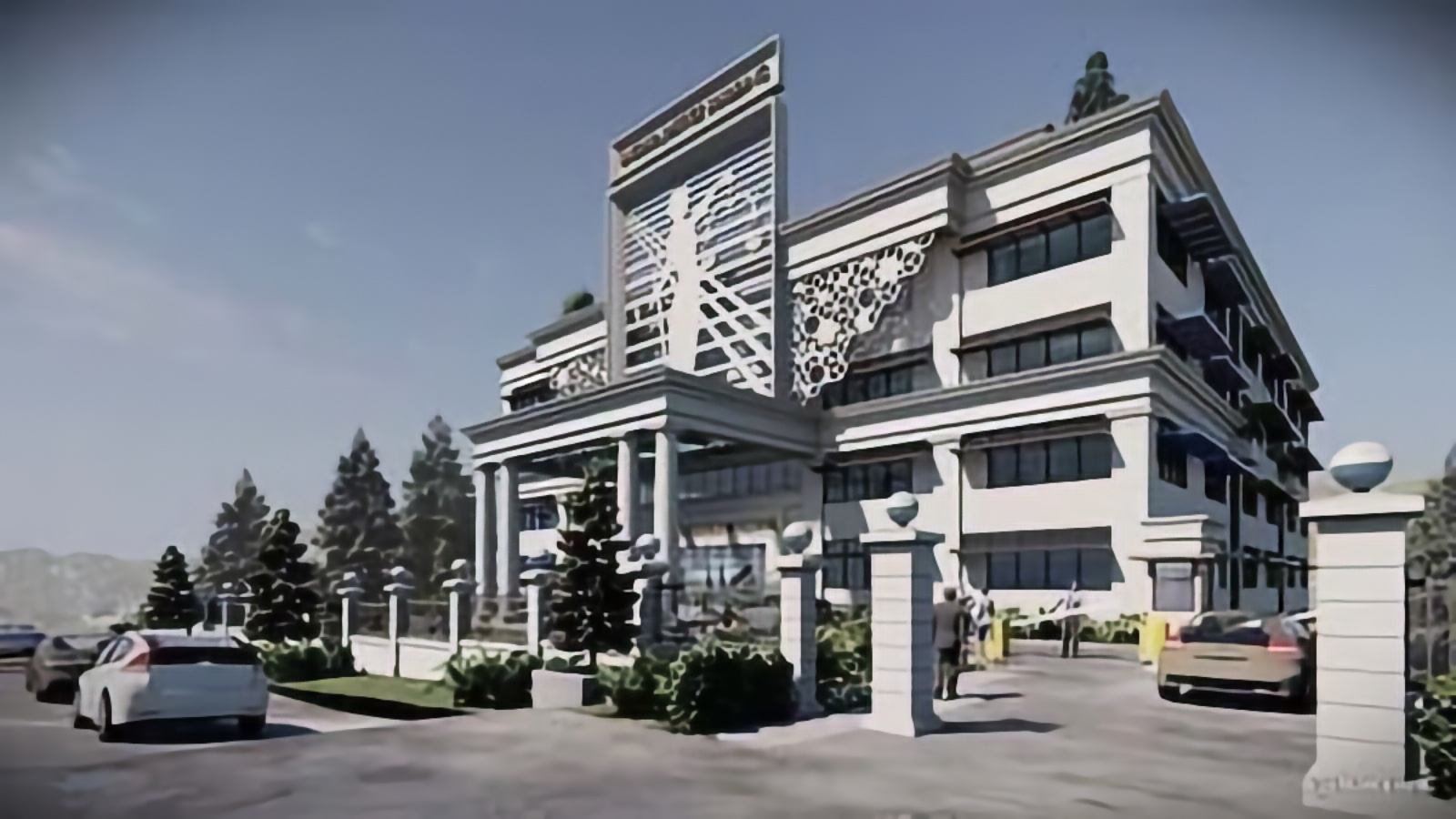
Project Details
Location : Loakan Road, Baguio City, Philippines
Proponent : City of Baguio and Department of Justice
Building Area: 4,104 square meters
Status: Unbuilt
Project Description
The Baguio Justice Project was conceived as a pioneering civic development that would bring together key justice-sector functions within a single, modern, and environmentally responsible facility. Undertaken for the Department of Justice and the City of Baguio, the project sought to create a highly functional government complex that reflects the principles of transparency, efficiency, and public service while establishing a new benchmark for sustainable institutional architecture in the Cordilleras.
Strategically located along Loakan Road, the development was envisioned as a Net Zero Building (NZB)—one capable of producing as much energy annually as it consumes. This ambitious objective guided the planning and design process from the earliest stages, influencing the building's orientation, massing, energy systems, and environmental strategies. The project demonstrates how government facilities can lead by example in promoting responsible resource management and long-term sustainability.
The architectural design presents a contemporary civic image that conveys stability, dignity, and accessibility. Organized around a central atrium that introduces natural daylight deep into the building, the facility creates a welcoming environment for both the public and government personnel. The atrium also serves as a natural ventilation chimney, improving indoor environmental quality while reducing dependence on mechanical systems. Generous glazing, landscaped terraces, and open public spaces further reinforce the building's connection to its natural surroundings.
Sustainability measures were integrated throughout the project. Extensive rooftop solar photovoltaic arrays were incorporated to support the building's net-zero energy goals, while green roofs and planted terraces help reduce heat gain and improve stormwater management. High-performance building systems, energy-efficient lighting, natural ventilation strategies, and water conservation measures collectively contribute to reducing the facility's environmental footprint. Together, these elements create a building that is both environmentally responsible and economically sustainable throughout its operational life.
The facility was carefully planned to accommodate the diverse operational requirements of justice-sector agencies. Public service areas, administrative offices, meeting facilities, records storage, and support spaces are organized to promote efficient workflows while ensuring security and accessibility. Multiple basement levels provide parking and service functions, preserving the site for landscaped areas and public amenities above ground.
Beyond its operational role, the project was envisioned as a symbol of progressive governance and environmental leadership. The building's design demonstrates that civic architecture can achieve high levels of performance while remaining responsive to local conditions, respectful of the environment, and welcoming to the community it serves. Its integration of advanced sustainability strategies reflects a broader commitment to creating resilient public infrastructure for future generations.
Although the project remains unbuilt, the Baguio Justice Project stands as one of our firm's most ambitious explorations of Net Zero Building design. It represents a convergence of sustainable technology, civic responsibility, and architectural innovation—offering a vision of how public institutions can lead the transition toward a greener and more sustainable future for the City of Pines.