To many people, architecture appears to be primarily about creativity, style, and visual appeal. While these elements are certainly important, the reality is that successful design involves balancing a complex network of decisions that affect functionality, budget, construction, regulations, sustainability, and long-term value.
Since founding RG Chan & Associates in 1982, I have learned that one of the architect's most important responsibilities is not simply creating beautiful buildings—it is bringing clarity to a process that can often seem overwhelming to property owners.
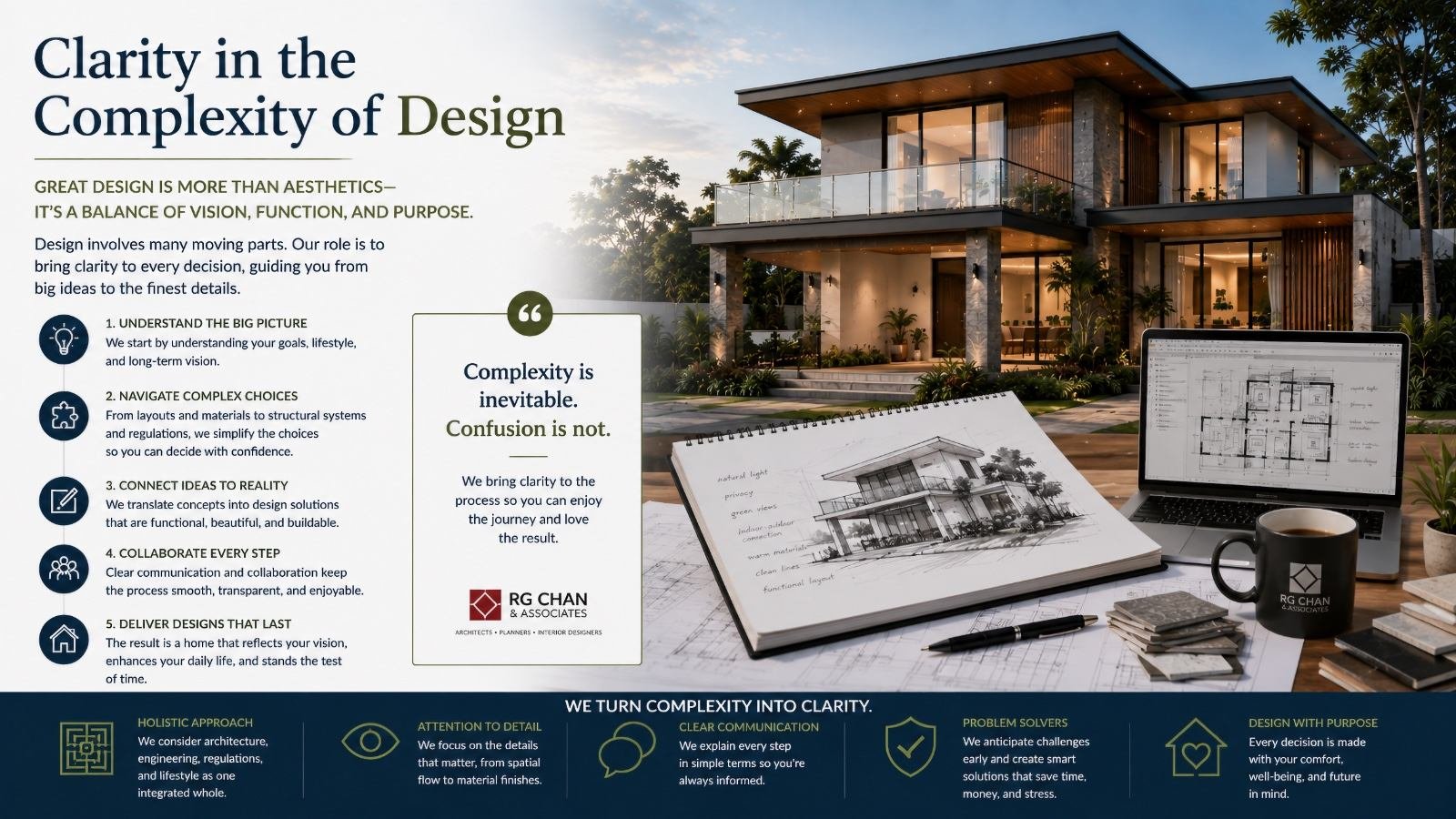
Complexity is inevitable. Confusion is not.
Understanding the Bigger Picture
Every project begins with a vision. Clients may have ideas about how they want to live, work, retire, or invest, but translating those goals into a successful building requires a broader understanding of the factors that influence design.
A home, for example, must respond not only to personal preferences but also to site conditions, climate, budget limitations, building regulations, construction methods, and future maintenance considerations.
Good design starts by understanding the bigger picture before focusing on individual details.
Navigating Complex Choices
Throughout a project, owners are asked to make numerous decisions. Layouts, materials, finishes, structural systems, building technologies, and procurement strategies all involve choices that can affect project outcomes.
Without professional guidance, these decisions can become overwhelming.
One of the architect's key roles is to simplify complexity by presenting options clearly, explaining implications, and helping clients evaluate alternatives based on their priorities and objectives. Informed decisions generally lead to better results and greater confidence throughout the project.
Connecting Ideas to Reality
Many clients arrive with sketches, photographs, online inspirations, or simply a vision of what they hope to achieve.
Turning those ideas into a buildable project requires more than creativity. It demands technical knowledge, coordination, documentation, and an understanding of how buildings are actually constructed.
Architecture serves as the bridge between imagination and reality. A successful design must not only inspire—it must function effectively, meet regulations, remain within budget, and perform well over time.
Collaboration at Every Stage
Building projects involve many participants, including owners, architects, engineers, consultants, contractors, suppliers, and regulatory authorities.
Each brings specialized expertise to the process.
Effective collaboration helps ensure that technical requirements, aesthetic goals, financial considerations, and construction realities remain aligned. Open communication reduces misunderstandings and helps projects move forward with greater efficiency and transparency.
Successful projects are rarely the result of individual effort alone. They emerge from coordinated teamwork and shared objectives.
Attention to Detail
While architects must maintain a broad perspective, successful projects are often determined by the details.
The placement of a window, the selection of materials, the relationship between interior and exterior spaces, and the coordination of building systems all contribute to the overall quality of a project.
Attention to detail helps transform a good design into an exceptional one. It is often the accumulation of many small decisions that ultimately shapes the experience of a building.
Turning Complexity into Clarity
At RG Chan & Associates, we approach every project as an integrated whole. Architecture, engineering, planning, regulations, construction, and client objectives must all work together toward a common goal.
Our role is to help clients understand the process, anticipate challenges, evaluate alternatives, and make informed decisions at every stage of development.
When complexity is managed effectively, projects become more predictable, communication improves, and owners gain greater confidence in the journey ahead.
After more than four decades of professional practice, I remain convinced that great architecture is not merely the result of creative talent. It is the result of thoughtful planning, disciplined problem-solving, clear communication, and a commitment to understanding what matters most to each client.
The best projects are those where complexity is carefully managed, decisions are clearly understood, and the final design reflects not only a vision, but a purpose.
In the end, architecture succeeds when it transforms complexity into clarity and ideas into places that enrich the lives of those who use them.