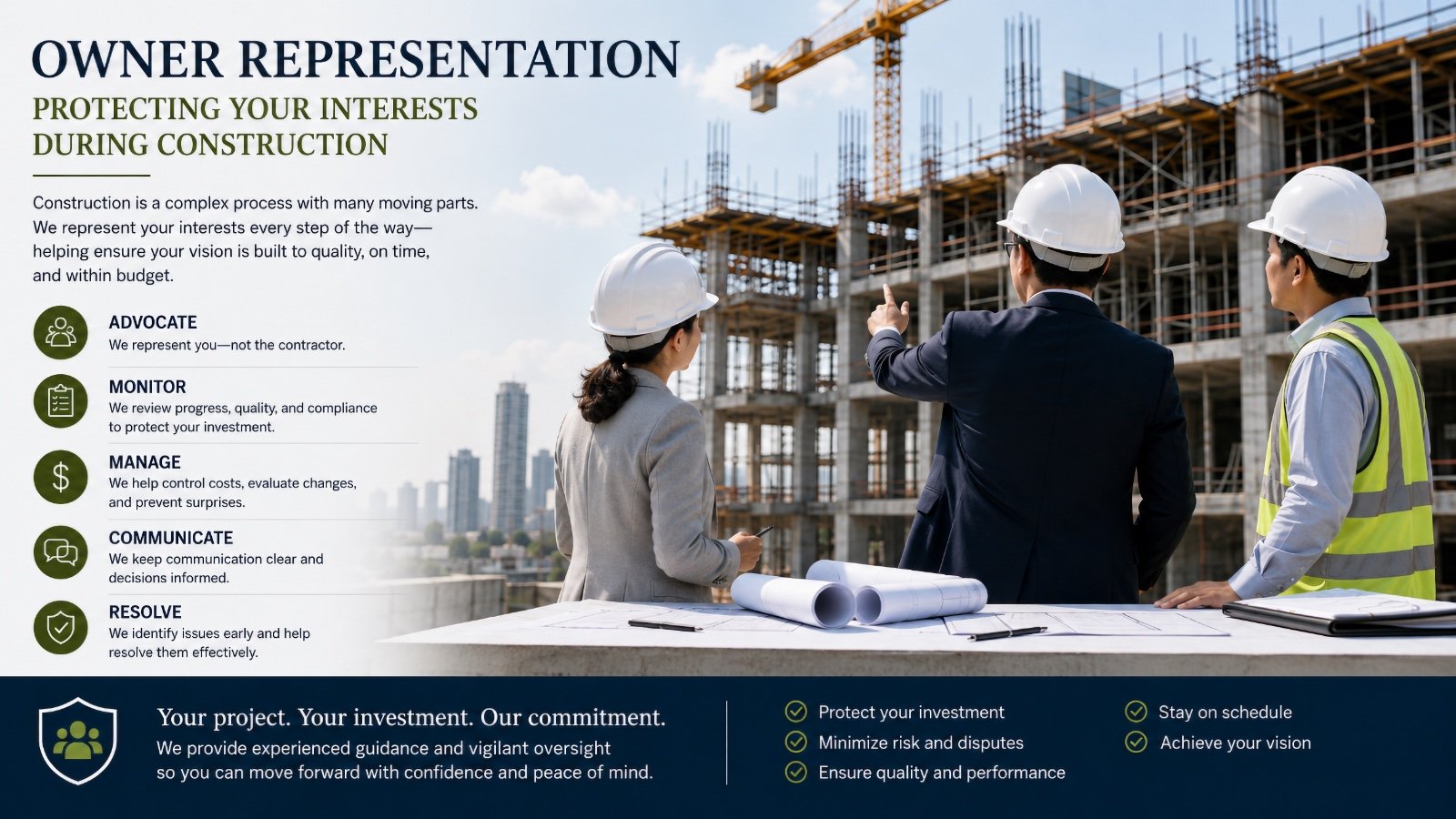
For many property owners, construction is an unfamiliar process involving substantial financial investment, numerous technical decisions, and multiple parties working toward a common objective. While most projects begin with optimism and excitement, challenges can arise when owners lack experienced representation during the construction phase.
Having practiced architecture and project management since founding RG Chan & Associates in 1982, I have observed that successful projects often share one important characteristic: the owner's interests remain clearly represented throughout the entire process.
Construction projects involve far more than simply transforming drawings into buildings. They require continuous coordination among designers, contractors, suppliers, consultants, regulatory agencies, and other stakeholders. Decisions are made daily, and each decision can have implications for cost, quality, schedule, and long-term performance.
Most owners possess expertise in their own professions and businesses, not necessarily in construction administration. This is where owner representation becomes valuable.
What Owner Representation Really Means
At its core, owner representation is about ensuring that project decisions remain aligned with the owner's objectives. It involves monitoring progress, reviewing information, facilitating communication, identifying potential issues early, and helping owners make informed decisions when challenges arise.
Promoting Accountability and Collaboration
One common misconception is that owner representation exists primarily to identify contractor mistakes. In reality, its broader purpose is to promote collaboration while maintaining accountability. Effective owner representation helps all project participants remain focused on achieving the project's intended goals.
Protecting the Project Budget
Budget protection is one important aspect. Construction projects frequently involve requests for changes, substitutions, schedule adjustments, and unforeseen conditions. Without proper evaluation, owners may approve decisions without fully understanding their financial implications. Independent review and professional guidance can help owners assess alternatives before committing additional resources.
Maintaining Quality Throughout Construction
Quality assurance is equally important. Construction documents establish expectations, but field conditions often require interpretation and clarification. Regular observation and informed review help verify that the completed work remains consistent with project requirements and performance objectives.
Managing Schedule Risks
Schedule management also deserves attention. Delays can affect not only construction costs but also financing arrangements, occupancy plans, business operations, and other commitments. Early identification of potential schedule risks allows corrective measures to be considered before problems become more significant.
The Importance of Clear Communication
Communication may be the most overlooked benefit of owner representation. Construction projects generate a substantial volume of information, including drawings, specifications, requests for information, meeting discussions, progress reports, and contract documents. Clear communication channels help reduce misunderstandings and support timely decision-making.
Representing the Owner Regardless of Delivery Method
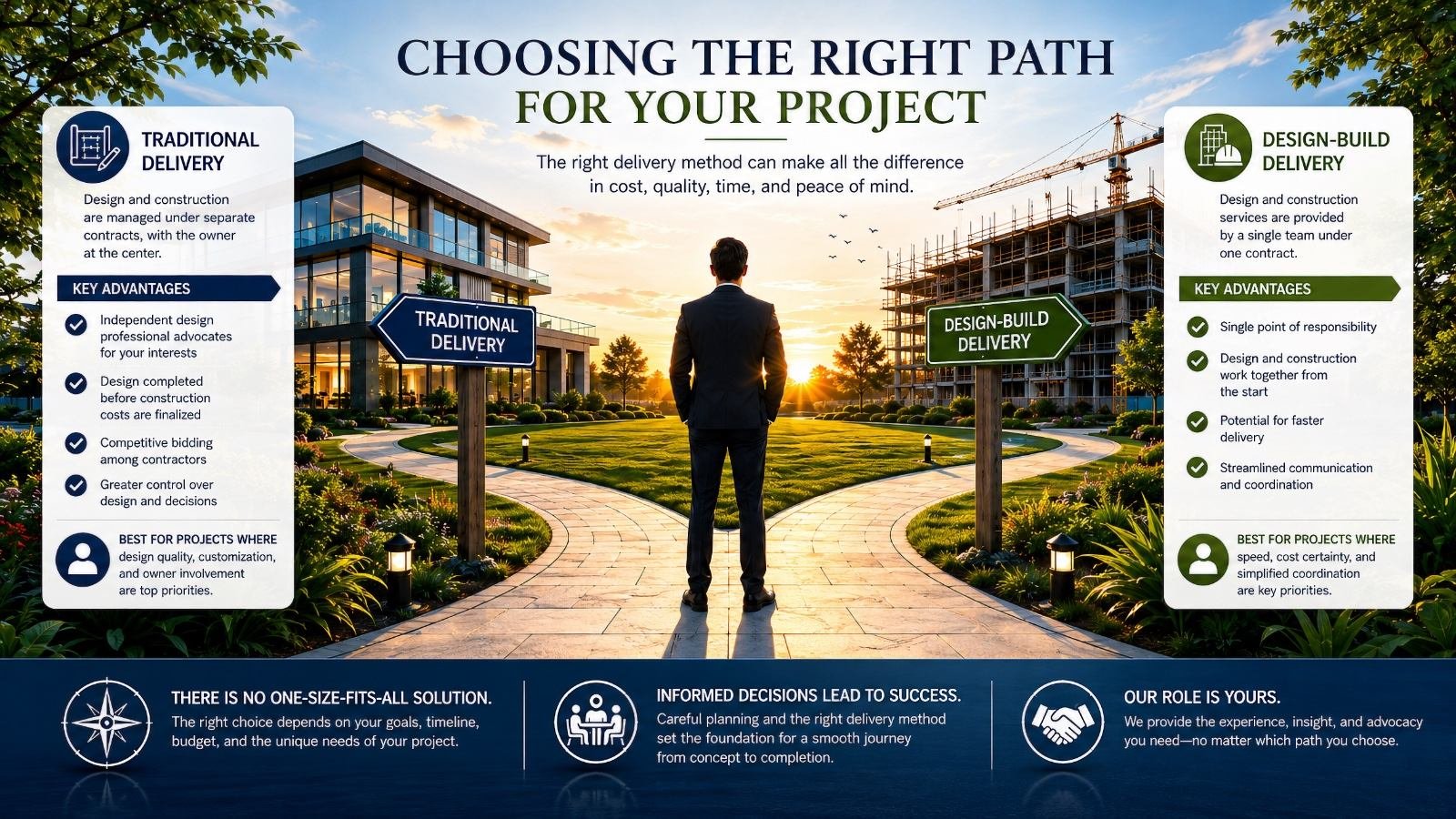
Whether a project follows a traditional architect-led delivery method, a Design-Build arrangement, or another procurement approach, the owner's interests should remain a central consideration. Every project participant naturally focuses on their specific responsibilities. Owner representation helps maintain a broader perspective by continually evaluating decisions from the owner's viewpoint.
A Real-World Example of Owner Representation
RELATED PROJECT
One project that reinforced the importance of protecting an owner's interests was the Santo Domingo Meetinghouse. Like other institutional projects undertaken for The Church of Jesus Christ of Latter-day Saints, the project was supported by a rigorous system of independent oversight, including regular inspections by the Architect-of-Record, full-time site monitoring during critical construction activities, and continuous review by Church project supervisors. The experience demonstrated that quality, accountability, and value are best achieved when proper checks and balances are maintained throughout construction.
Santo Domingo Meetinghouse Project
Professional Oversight Creates Better Outcomes
At RG Chan & Associates, we believe construction should not be a process where owners simply wait and hope for a satisfactory outcome. Instead, it should be a structured and transparent process supported by professional oversight, effective communication, and disciplined management.
Final Thoughts
Over the past four decades, I have learned that construction success is rarely determined by a single decision or dramatic event. More often, it results from hundreds of small decisions made correctly and consistently throughout the life of a project. Having knowledgeable representation during this process can provide owners with confidence, clarity, and peace of mind.
Ultimately, owner representation is not about creating additional layers of administration. It is about protecting an investment, supporting informed decision-making, and helping ensure that the completed project fulfills the vision that inspired it in the first place.
A building project may be temporary, but the consequences of construction decisions can last for decades. That is why protecting the owner's interests throughout construction remains one of the most important investments a project can make.