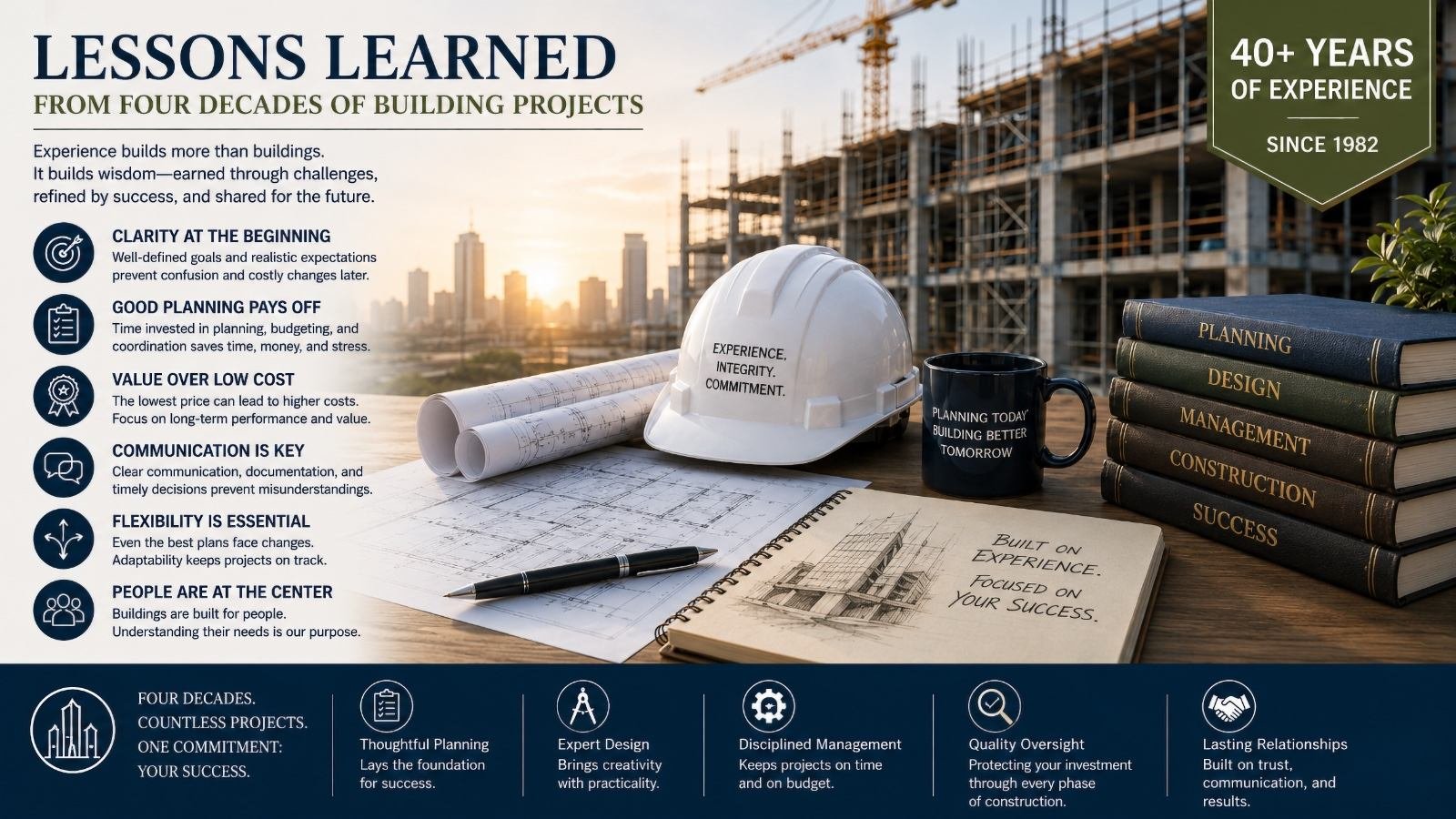
Having practiced architecture and project management since founding RG Chan & Associates in 1982, I have witnessed countless projects succeed—and some struggle—not because of construction quality, but because of decisions made long before construction began.
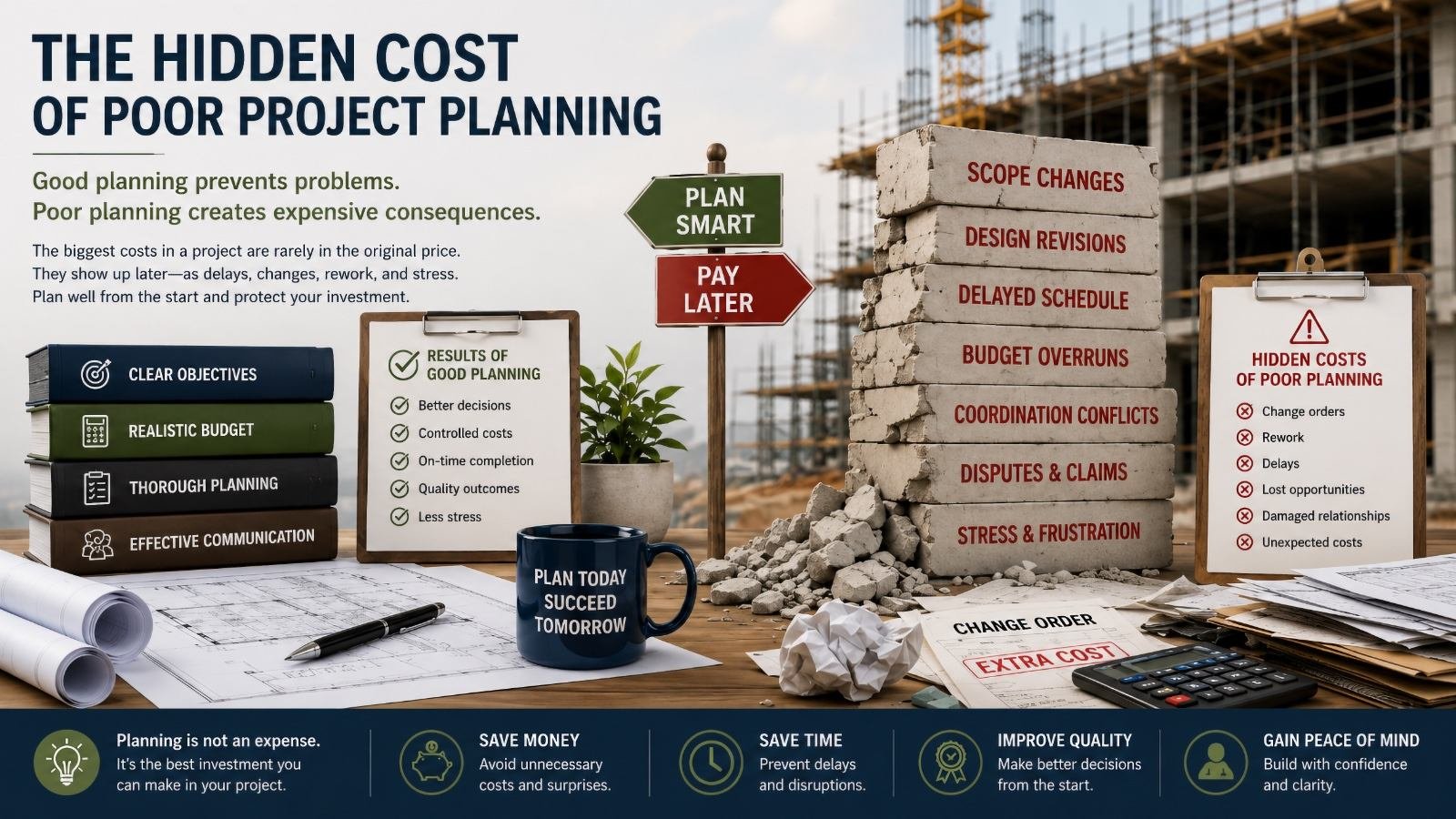
When property owners think about project costs, they naturally focus on labor, materials, and contractor quotations. Yet some of the most expensive costs are often hidden. They appear later in the form of delays, redesigns, change orders, disputes, and avoidable mistakes. More often than not, these issues can be traced back to inadequate project planning.
One of the most common misconceptions is that planning delays progress. In reality, proper planning usually saves both time and money. A well-prepared project brief, realistic budget, and clearly defined objectives provide the foundation for informed decision-making throughout the project lifecycle.
When Project Objectives Are Not Clearly Defined
Problems frequently arise when owners proceed with only a general idea of what they want to build. As design and construction move forward, new requirements emerge, priorities change, and revisions become necessary. While changes are sometimes unavoidable, modifications made during construction are typically far more expensive than adjustments made during the planning stage.
The Real Cause of Budget Overruns
Budget overruns often have similar origins. In many cases, the issue is not that construction costs increased unexpectedly, but that project expectations were never properly aligned with available resources. Without realistic budgeting and early cost evaluation, owners may discover too late that desired features exceed financial limitations, forcing difficult compromises.
The Cost of Poor Coordination
Another hidden cost involves coordination. Modern buildings are complex systems that require architectural, structural, mechanical, electrical, and other disciplines to work together seamlessly. When planning and coordination are insufficient, conflicts may only become apparent during construction, resulting in delays, rework, and additional expense.
Choosing the Right Project Delivery Strategy
Project delivery methods also deserve careful consideration. Whether a project follows a traditional architect-led process, a Design-Build arrangement, or another procurement approach, owners should understand how decisions will be made, how quality will be controlled, and who will represent their interests. Selecting the appropriate project delivery strategy is itself an important planning decision.
The Hidden Cost of Stress and Uncertainty
Beyond financial considerations lies another cost that is rarely discussed: stress. Construction projects represent significant investments of time, money, and emotion. Uncertainty, unexpected changes, and disputes can create frustration for everyone involved. Effective planning reduces uncertainty and establishes a clear roadmap, allowing projects to proceed with greater confidence and predictability.
Protecting the Owner's Investment Through Planning
At RG Chan & Associates, we have long believed that successful projects begin long before construction starts. Careful planning, thorough documentation, realistic budgeting, and disciplined project management are not administrative exercises; they are essential tools for protecting a client's investment.
Final Thoughts
After more than four decades in professional practice, I remain convinced that project planning is one of the highest-value services an owner can obtain. While thoughtful planning requires time and effort, the alternative is often far more costly.
The most successful projects are not necessarily those with the largest budgets or the most ambitious designs. They are the projects where objectives are clearly defined, decisions are carefully evaluated, and planning receives the attention it deserves. In the end, the surest way to control costs is not simply to build efficiently—it is to plan intelligently.