One of the earliest and most important decisions a property owner faces is determining how a project will be delivered. Long before construction begins, the choice between a Design-Build approach and a Traditional Delivery method can significantly influence project outcomes, costs, communication, and risk management.
Having guided clients through building projects since establishing RG Chan & Associates in 1982, I have observed successful projects under both systems. The key is not identifying a universally superior method, but understanding which approach best aligns with the owner's objectives, priorities, and circumstances.
Understanding Traditional Project Delivery
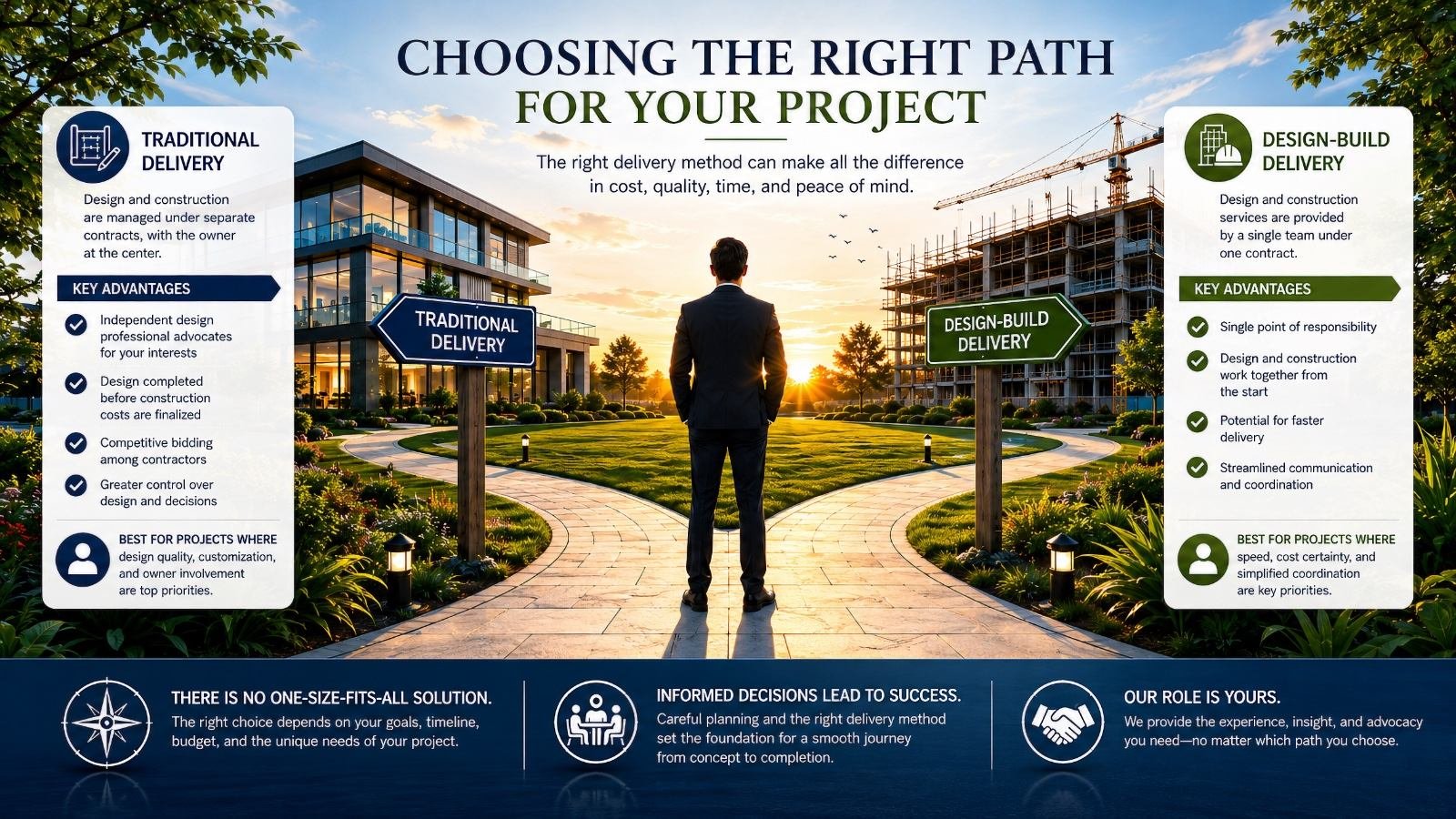
Under the Traditional Delivery model, the owner first engages an architect and design team to develop the project. Once the design and construction documents are completed, contractors are invited to submit proposals for construction. Design and construction therefore remain separate contractual responsibilities.
Many owners appreciate this arrangement because it provides an independent design professional whose primary responsibility is to represent the owner's interests throughout planning and construction. It also allows greater opportunity to refine the design before committing to a construction contract. Competitive bidding may further help owners evaluate market pricing and contractor qualifications.
Understanding the Design-Build Approach
The Design-Build method takes a different approach. Design and construction services are provided through a single entity or contractual arrangement. Because the design and construction teams work together from the outset, coordination can often be streamlined, potentially reducing project schedules and simplifying communication.
For some projects, these advantages can be significant. Owners may appreciate having a single point of responsibility and a more integrated project team. Decisions can sometimes be made more quickly, and construction activities may begin earlier than in a traditional sequence.
Evaluating the Trade-Offs
However, each approach presents considerations that owners should carefully evaluate.
In a Traditional Delivery arrangement, the design phase may require additional time before construction begins. Owners must also manage relationships among multiple project participants, including designers, consultants, and contractors.
In a Design-Build arrangement, owners should clearly understand how design decisions are made and how project quality will be evaluated. Because design and construction are combined, it becomes particularly important to ensure that project objectives, performance requirements, and expectations are clearly defined from the beginning.
Which Approach Is Right for Your Project?
From my experience, the most important question is not whether Design-Build or Traditional Delivery is better. The more important question is: What are the owner's priorities?
If design quality, extensive owner involvement, and independent professional representation are primary considerations, a traditional architect-led process may offer important advantages.
If speed, simplified contractual relationships, and integrated delivery are key objectives, Design-Build may be worthy of consideration.
Project Success Depends on More Than Delivery Method
Regardless of the method selected, project success ultimately depends on careful planning, realistic budgeting, competent project management, and clear communication among all participants. No delivery system can compensate for poorly defined objectives or inadequate preparation.
A Real-World Example of Traditional Delivery:
RELATED PROJECT
One of the most valuable lessons in project delivery came from the Laoag Meetinghouse, completed in 1989 for The Church of Jesus Christ of Latter-Day Saints. As one of the world's most experienced institutional building owners, the Church consistently favored the Traditional Delivery Method, requiring complete design documentation and competitive bidding among multiple qualified contractors. The project demonstrated that successful owners often select not the lowest bid, but the most advantageous bid—balancing cost, quality, experience, and reliability.
Laoag Meetinghouse Project
Helping Owners Make Informed Decisions
At RG Chan & Associates, we believe owners benefit most when they fully understand the implications of their choices before commitments are made. Our role is not merely to produce drawings or oversee construction, but to help clients make informed decisions that align with their goals, resources, and long-term interests.
Final Thoughts
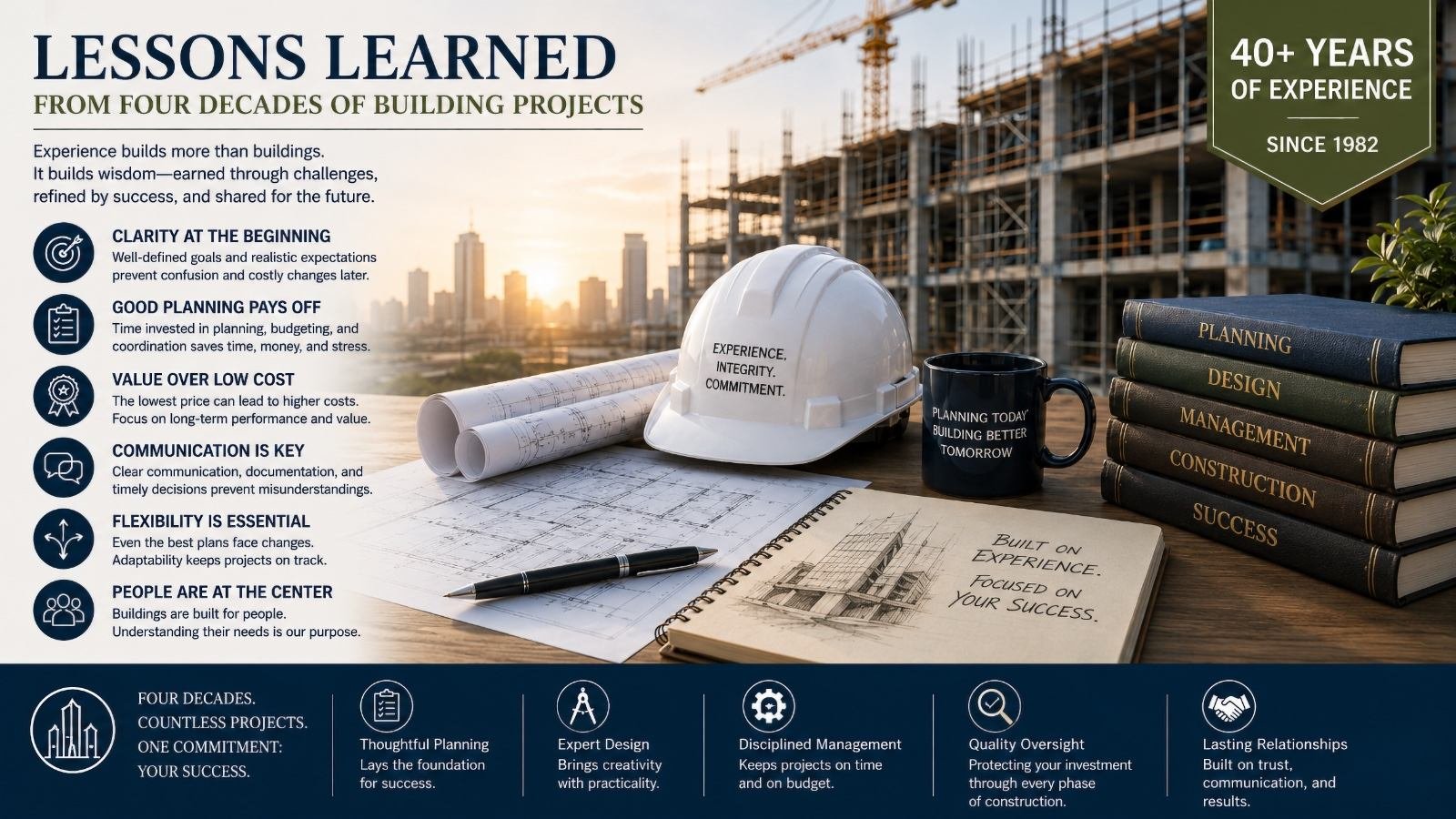
After more than four decades of professional practice, I have learned that successful projects rarely result from selecting the "perfect" delivery method. Rather, they result from selecting the method that best fits the project—and then managing it with discipline, transparency, and professional expertise.
Choosing the right path at the beginning often determines the success of the journey that follows.